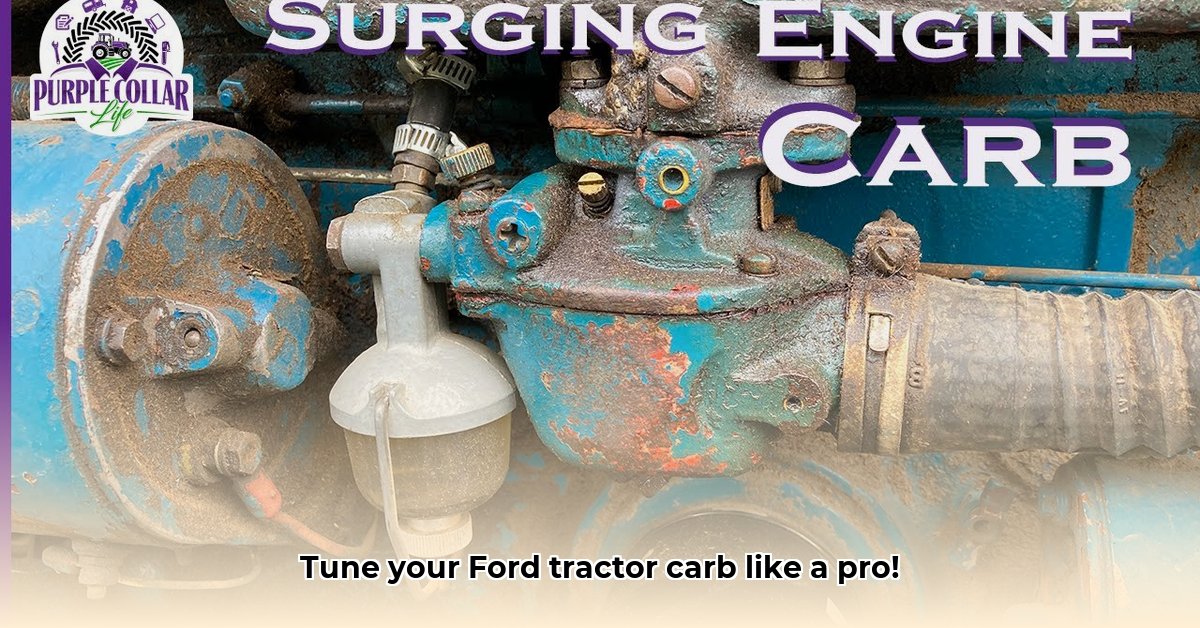
Is your Ford tractor sputtering and refusing to cooperate? A poorly adjusted carburetor could be the culprit. This guide provides a step-by-step approach to troubleshooting and adjusting the carburetor on your Ford 8N, 9N, 2N, and similar models, covering both Marvel-Schebler and Zenith carburetors. We'll focus on achieving a smooth, reliable idle and optimal engine performance. For more information on Ford tractor horsepower, check out this helpful resource: Ford Tractor Horsepower.
Pre-Adjustment Checks: Essential Troubleshooting
Before you even think about adjusting the carburetor, systematically eliminate other potential problems. A faulty ignition system, fuel delivery issues, or even a clogged air filter can mimic carburetor problems, leading to wasted time and effort. Addressing these first saves frustration and ensures accurate adjustments later.
Fuel System Inspection: Begin by checking your fuel tank for debris, water contamination, or low fuel levels. Inspect fuel lines for cracks, leaks, or kinks. A clogged fuel filter is a frequent offender; replace it with a new one if necessary. Has it been a while since you replaced it? Consider doing this preventative maintenance even if it appears clean.
Ignition System Check: A weak spark can significantly impact engine performance. Inspect your spark plugs (replace if worn or fouled), distributor points (clean and adjust as needed), condenser, and ignition coil. A faulty component in the ignition system can easily mimic carburetor issues. This step is critical because it often gets overlooked.
Air Intake: A restricted or dirty air filter can starve the engine of oxygen, causing poor performance. Clean or replace your air filter to ensure proper airflow. Remember, an engine needs both fuel and air for proper combustion.
Understanding Your Carburetor: Identifying Key Components
Familiarize yourself with your carburetor's components before proceeding. While the exact layout varies slightly between Marvel-Schebler and Zenith carburetors, several key adjustment screws are common to most models.
- Idle Speed Screw: This adjusts the engine's idle speed. A smooth, consistent idle is the target.
- Idle Mixture Screw: This controls the air-fuel mixture at idle. Adjusting this screw fine-tunes the balance for optimal idle performance.
- Main Mixture Screw: This screw impacts the air-fuel ratio at higher engine speeds (above idle). This adjustment is crucial for overall engine performance under load.
- Float Level (Critical!): The float level controls the amount of fuel in the carburetor's bowl. An incorrect float level will lead to either flooding (too high) or a lean fuel mixture (too low). This is often overlooked, but fundamentally important.
The Adjustment Process: A Step-by-Step Guide
Once you’ve completed the pre-adjustment checks, you can begin the adjustment process. Remember patience is key; small, incremental adjustments are more effective than large, erratic changes.
Warm-up is Essential: Run the tractor until the engine reaches its normal operating temperature. A cold engine will yield inaccurate readings and may exacerbate existing problems. Is your tractor completely warmed up?
Initial Settings (Marvel-Schebler/Zenith): Consult your tractor's service manual or a reputable online resource for recommended starting points for your specific carburetor model. These often suggest starting positions for mixture screws; slightly adjust from there.
Idle Mixture Adjustment: With the engine at a warm idle, carefully adjust the idle mixture screw, using a small flathead screwdriver. Listen for the highest stable idle speed. The goal is a smooth, consistent idle, often found just below the peak RPM. Is the idle smooth and consistent?
Idle Speed Adjustment: Once you achieve a smooth idle mixture, use the idle speed screw to set your desired RPM. A slightly higher idle speed is acceptable during cold starts and high-load situations. What's the optimal idle speed for your tractor? Consult your service manual.
Main Mixture Adjustment: Increase the engine speed to half throttle or around 1500-2000 RPM (consult your service manual for your tractor's specific recommendation). Slowly adjust the main mixture screw, listening for any changes in engine performance. Slight adjustments can have a noticeable impact. Is the engine performing well under load? Does it have enough power?
Float Level Check (Absolutely Necessary): An improperly adjusted float level can negate all other efforts. Consult your service manual for specific instructions on checking and adjusting the float level, as this varies significantly between carburetor models. This is essential for optimal fuel delivery.
Fine-Tuning and Testing: After making each adjustment, thoroughly test the tractor's performance under various conditions – idle, light load, and full throttle – to assess whether you've made improvements. Continue making incremental adjustments until you achieve a smooth, reliable performance. Have you noted the improvements in your tractor's response?
Troubleshooting Common Issues
Even after careful adjustment, you may still encounter some issues.
Rough Idle: If the engine continues to idle roughly, recheck the ignition system for any problems and then focus on fuel delivery and repeat the idle mixture and float level adjustments as needed.
Stalling: Stalling often indicates a lean fuel mixture. Recheck the fuel delivery system, and adjust the mixture screws accordingly (leaning towards a richer mixture).
Flooding: Flooding suggests a rich fuel mixture (often caused by a high float level). Lower the float level according to your service manual.
Remember, adjusting a carburetor is an iterative process that requires patience and attention to detail. Don't be discouraged if it doesn't happen overnight! Carefully documented adjustments and thorough testing are paramount to success. Happy tractoring!